Airbag Tech for Riders

Liam Reilly
| 08-06-2026
 · Vehicle Team
Imagine cruising down an open road, wind in your hair, when suddenly, you lose control of your bike. The thought of a crash is enough to make anyone uneasy.
However, with advanced airbag technology now built into motorcycles, that feeling of safety and security is becoming a reality.
Motorcycle airbags have taken rider protection to a whole new level. Let's explore how these life-saving innovations are designed to reduce injury and enhance safety for riders everywhere.
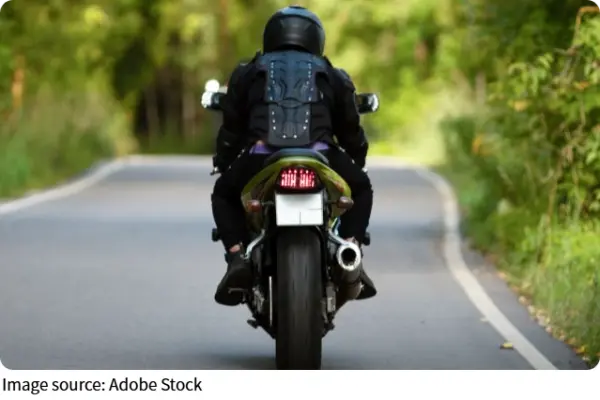
1. The Evolution of Motorcycle Airbags
Motorcycle airbags are not a recent concept, but the technology has drastically evolved over the past few decades. Initially, airbags were mostly found in cars, and the idea of applying this to motorcycles seemed almost impossible. However, as technology advanced and safety demands grew, manufacturers began integrating airbag systems into motorcycles and protective gear, such as jackets and vests.
These airbags work similarly to the ones in cars: they inflate instantly during a crash to cushion the rider and reduce the impact. The real breakthrough came when designers started focusing on making these airbags compact enough to fit on a bike without compromising their design or performance.
In 2018, Honda introduced its first motorcycle with a built-in airbag system on the Gold Wing touring bike. This airbag, located in the bike's front section, inflates when sensors detect a collision, providing critical protection for the rider's chest.
2. How Motorcycle Airbags Work
Motorcycle airbags use sensors and electronics to detect when a crash is imminent. These sensors measure the bike's speed and the rider's movement, triggering the airbag to deploy at just the right moment. Typically, the airbag inflates in less than 60 milliseconds, offering a split-second cushion to absorb the force of the impact.
The airbag is usually mounted either on the bike itself or in the rider's protective gear, such as a jacket or vest. When deployed, it provides a barrier between the rider and the ground, helping to reduce injuries from head, neck, and chest impacts, which are some of the most dangerous in a motorcycle crash.
The Dainese D-Air system is a leading example of an airbag incorporated into a rider's protective gear. The jacket's airbag inflates in response to sudden deceleration, providing the rider with an extra layer of protection during a crash or fall.
3. Benefits Beyond Basic Protection
While the primary function of a motorcycle airbag is to protect the rider during a crash, the benefits extend beyond just injury reduction. The psychological aspect of knowing that you're protected can increase a rider's confidence, leading to better control over the bike. This increased confidence can reduce risky behavior on the road, ultimately contributing to fewer accidents.
Moreover, airbag systems are designed to complement other safety features, such as helmets and protective clothing, creating a comprehensive approach to rider safety. When combined with the right gear, airbags can make a significant difference in the severity of injuries during an accident.
The BMW Motorrad's Motorrad Pro Ride airbag system works in tandem with the rider's riding suit. This integrated system detects dangerous situations such as falls or high-speed crashes, ensuring maximum safety protection.
4. Airbags in Motorcycles vs. Airbags in Gear
There are two main types of motorcycle airbags: those built into the motorcycle itself and those integrated into the rider's gear. Each has its unique advantages.
Bike-mounted airbags, like the ones found on touring motorcycles, are designed to protect the rider in frontal crashes, especially in more severe collisions. On the other hand, rider gear airbags offer the flexibility of being worn with any bike, providing versatile protection for those on different types of motorcycles, from sport bikes to cruisers.
A motorcycle like the Yamaha Tracer 900 GT is equipped with a bike-mounted airbag, while riders of any bike can use Dainese's airbag jacket, which provides protection for the torso and neck, whether on a cruiser, sports bike, or touring motorcycle.
5. The Future of Airbags in Motorcycle Safety
As motorcycle airbag technology continues to improve, we're likely to see more advanced and accessible options for riders. Manufacturers are constantly working to make these systems more efficient, with smaller airbags that deploy faster and at more precise angles. There's also a push to incorporate airbags into all levels of motorcycle gear—so no matter the bike, all riders can enjoy the protection.
R&D is also looking into the possibility of airbags that activate on a wider range of crash scenarios, not just frontal impacts, providing protection in side impacts and falls as well. Some researchers are even exploring the idea of motorcycle airbags that deploy in mid-air for riders who are thrown from their bikes.
Honda's efforts to refine motorcycle airbag technology are ongoing. They're researching advanced sensors that can detect side impacts and deploy airbags from multiple angles to ensure more complete protection for riders.

Motorcycle airbags are no longer just a luxury for the few—they're becoming an essential part of rider safety. With advances in technology and more affordable options, airbag systems are set to become a standard feature in the motorcycle industry.
As they evolve, these systems will not only reduce injury in crashes but will help riders feel more confident on the road. In a world where safety is paramount, motorcycle airbags represent a major step forward in ensuring that riding remains as safe as it is exhilarating.